People: Influence and Technology Lab
Lab Director: Dr Jon Roozenbeek
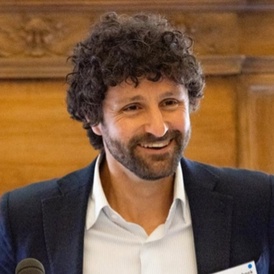
Jon Roozenbeek is Director of the Influence and Technology Lab, which sits between the Department of Psychology at the University of Cambridge and the Department of Communication Science at the Vrije Universiteit Amsterdam. He studies (mis)belief formation, intergroup conflict, polarisation, and the use and misuse of modern communication technologies. He holds a PhD in Slavonic Studies (2020), also from the University of Cambridge, for which he studied propaganda and ideology-building in Russian-occupied Donbas (Ukraine). Jon has authored two recent books with Cambridge University Press: The Psychology of Misinformation (with Prof. Sander van der Linden) and Propaganda and Ideology in the Russian-Ukrainian War. In addition, he has written more than 70 peer-reviewed publications, published in journals including Science, Nature, Nature Human Behaviour, Nature Communications, Nature Computational Science, PNAS, Science Advances, and Psychological Science. His work has been awarded numerous distinctions, including the 2024 Rising Star Award (Association for Psychological Science) and the 2025 Jim Sidanius Early Career Award (International Society of Political Psychology), and he is among the top 1% most-cited scientists worldwide.
Dr Jon Roozenbeek's Google Scholar page
Office: Room 413, Main Psychology Building
Postdoctoral Research Fellow: Yara Kyrychenko
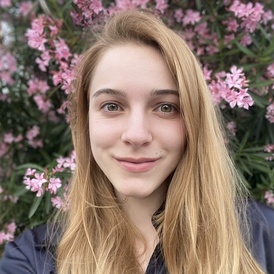
Yara Kyrychenko is an incoming Junior Research Fellow at St. John’s College, Cambridge. As a Gates Scholar, she is finishing her PhD in Psychology at the University of Cambridge. Originally from Kyiv, Ukraine, she graduated summa cum laude from New York University with a double major in Mathematics and Psychology. As a PhD candidate co-advised by Prof. Sander van der Linden and Dr Jon Roozenbeek, she combines psychological theory with computer science methods to investigate both the dangers and the opportunities of social technology. Yara was part of The Alan Turing Institute’s Enrichment Scheme, focusing on the social evaluation of AI. She has also completed a research internship with Nokia Bell Labs’ Responsible AI team, working on Constitutional AI.
Yara Kyrychenko's Google Scholar page
PhD student: Malia Marks
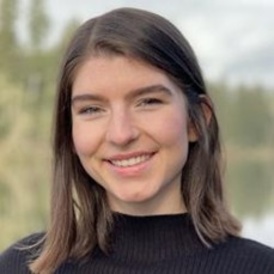
Malia studies the psychological drivers of support for authoritarian governance, and is funded by the Harding Distinguished Postgraduate Scholars Program. She began her studies at Harvard where she obtained a BA in psychology with Highest Honors, having completed an empirical research thesis on short-term risk factors for suicide in psychiatric inpatients. She then completed a MPhil in Criminological Research at Cambridge's Institute of Criminology, earning a distinction and placing first for her research on the victim-offender overlap and psychological impact of violent victimisation over time. In her current work, supervised by Dr Jon Roozenbeek and Prof. Lee de-Wit, Malia is using exploratory statistical analyses and applying theories from social psychology to improve the field's understanding of the right wing authoritarianism scale, as well as to develop an alternative scale for authoritarianism with improved cross-cultural validity. She is also collaborating on a range of projects, using time-series analysis and large language model classifiers to analyse social media data.
Malia Marks' Google Scholar page
Research affiliate: Dr Anton Dek

Dr Anton Dek is a data scientist and researcher with a background in both academic research and applied industry work. Originally from Ukraine, he works as a researcher at the University of Cambridge’s Judge Business School and has led data science teams in the private sector. His expertise includes the application of large language models (LLMs), digital assets, and social media manipulation research. He is also an expert on illicit markets and “grey” economies, particularly in the post-Soviet space.
Dr Anton Dek's Google Scholar page
Research affiliate: Miriam Remshard
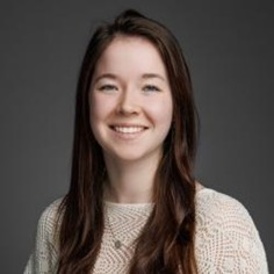
Miriam is doing her PhD in Psychology at the University of Cambridge funded by the Yale Program on Climate Change Communication and the German Academic Scholarship Foundation. Originally from Germany, she graduated from the University of Oxford with a First-Class Honours degree in Experimental Psychology. Subsequently, she completed her master’s at Yale University, where she expanded upon her quantitative research background by using qualitative methodologies to study climate change misperceptions. During her time at Yale, she also worked as a Social Data Scientist with the Yale Program on Climate Change Communication. As a PhD Candidate, she is developing her line of inquiry from her master’s research by exploring barriers to effective climate action and how psychological interventions can be used to foster more impactful behaviour.
Visiting professor: Eti Ben-Simon
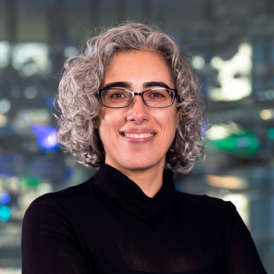
Eti Ben Simon is a Research Assistant Professor at the Center for BrainHealth, University of Texas at Dallas and the Associate Director of the Sleep Innovation Laboratories at UTD. She studies the neural mechanisms of sleep-dependent behaviour in humans, with a particular focus on the emotional and social changes that arise as a result of sleep loss. Her pioneering research was the first to demonstrate the negative impact of sleep deprivation on prosocial altruism and to identify its neural underpinnings using neuroimaging. Her work has shown that even a single night of insufficient sleep can heighten anxiety, reduce empathy, and impair the ability to connect meaningfully with others. She received her Ph.D. in neuroscience from Tel Aviv University in Israel and subsequently conducted postdoctoral research at the Center for Human Sleep Science at the University of California, Berkeley, under Professor Matthew Walker. Her research has been published in leading journals including Nature Human Behaviour, Nature Communications, and PLOS Biology.
Visiting PhD student: Edoardo Loru
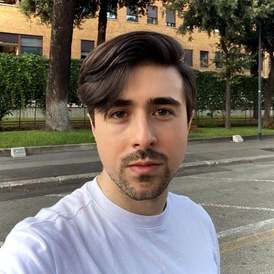
Edoardo is a PhD candidate at the Sapienza University of Rome with a background in Physics (B.Sc.) and Data Science (M.Sc., cum laude), working under the supervision of Prof. Walter Quattrociocchi at the Center for Data Science and Complexity for Society (CDCS). He is visiting the ITLab during the spring and summer of 2026. His research lies within computational social science, using data science to study online social dynamics and emergent behavior such as misinformation spreading, online polarization, and coordinated behavior, as well as the societal impact of large language models. He takes a data-driven approach drawing mainly on network science, alongside statistical and machine learning methods. He has authored multiple publications in journals such as PNAS and ACM TKDD. In particular, his research on the simulation of judgment in large language models has received considerable attention in relation to the reliability of current AI systems. He has been invited to present at academic seminars and has presented at international conferences.
Visiting student: Mira Lubashev
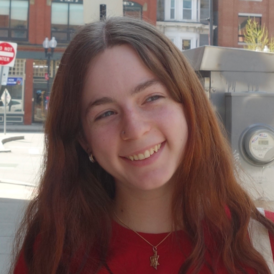
Mira is an undergraduate studying Mathematics at the Massachusetts Institute of Technology (MIT) and is visiting the ITLab for Summer 2026. She has previously conducted research on various subjects in pure mathematics, including linear algebra, group theory, and graph theory, and works as a computational social choice researcher at MIT, with a focus on post-selection dropout handling in the sortition process. At Cambridge, Mira is examining trends in inauthentic activity on social media and applications of large language models for data collection and analysis.
Visiting student: Claire Chen

Claire Chen is completing her undergraduate degree in Computer Science at the Massachusetts Institute of Technology (MIT) and is visiting the ITLab for Summer 2026. Her research interests include machine learning and computational approaches to online behavior, with a focus on security and misinformation.
At MIT, she has worked on machine learning projects in areas including healthcare and natural language processing, including building predictive models for clinical risk, fine-tuning transformer-based models for biomedical text classification, and developing data-driven optimization methods. In her current summer research at the ITLab, she is collecting and analyzing signals of inauthentic online activity and exploring machine learning and LLM-based approaches for large-scale data collection, analysis, and interpretation.
Visiting student: Alice Shi

Alice is an undergraduate studying Psychological and Behavioural Sciences at Fitzwilliam College, Cambridge, and is visiting the ITLab for Summer 2026. She is interested in decision-making, social influence, and how behavioural insights can be leveraged to address societal challenges. She is currently contributing to a systematic review on the voter turnout gap.